Persisting in the Name of Passion
How Parisa Abadi Went From Mechanical Engineering to Heart Repair
View Article

Abadi Lab at Michigan Tech is an interdisciplinary lab focusing on solving problems at the interface of materials, mechanics, and nanoscience. Our lab employs advanced manufacturing techniques such as 3D printing, bioprinting, and chemical vapor deposition to explore various engineering applications of advanced materials ranging from structural and electronic materials to tissue engineering and medical devices. A great focus of our lab is on conductive nanomaterials especially carbon nanotubes, carbon nanotube forests, graphene, and conductive nanomaterials incorporated in polymer composites. Visit other pages of this website to learn more about us and feel free to contact us if you have any questions or comments.
We have immediate openings in all of our projects for current MTU MS students with a strong background in solid mechanics/materials/tissue engineering. Interested candidates should contact Dr. Abadi with their CV and cover letter.
For more information, please view out Openings page.
Persisting in the Name of Passion
How Parisa Abadi Went From Mechanical Engineering to Heart Repair
View Article
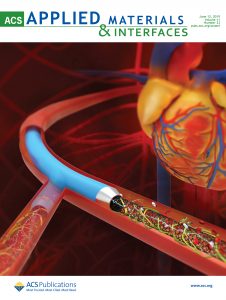
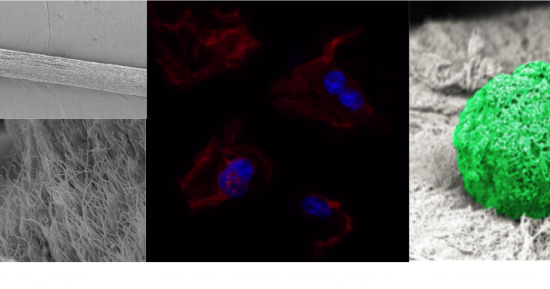
In our 2019 paper published in ACS Applied Materials and Interfaces and highlighted on the cover, we report fabrication of biocompatible, electrically conductive and tough microfibers made of hyaluronic acid and single-walled carbon nanotubes by a wet spinning method. The microfibers presented excellent electrical conductivity, mechanical properties and stable actuation behavior in biological medium. In vitro cytocompatibility and in vivo biocompatibility experiments in mice were carried out, and showed that the fabricated microactuators are applicable in biomedical areas. Overall, the microfibers and bundles made with weaving the fibers exhibit excellent mechanical properties, stable electrical conductivity, good electrochemical and actuation behavior and, hence, prove to be promising materials for implantable microactuators and flexible electronic devices in biomedical applications.
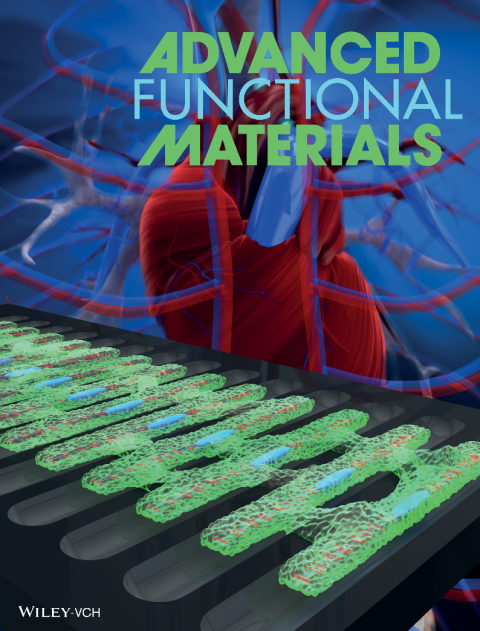
Immaturity of cardiomyocytes derived from induced pluripotent stem cells is an important issue in the field of cell therapeutics. In our 2018 paper published in Advanced Functional Materials and highlighted on the cover, we develop substrates with multi-scale topography resembling the three-dimensional features of the native heart environment to address the issue of immaturity of cardiomyocytes. The results show faster differentiation, enhanced maturity, and improved beating. Read the news about our article and group research in Michigan Tech News, Science Daily, Medical Xpress, News Medical, Technology Network, Bioengineer.org, Science Newsline, Medindia, Drugnews.in, and Medicalnewser.com.
July 20'
Dr. Abadi in cooperation with other Michigan Tech researchers receives NSF Major Research Instrumentation Program (MRI) grant for Acquisition of Nanoscribe Photonic Professional GT2 3D Lithography System.
July 20'
Congratulations to Masoud for successfully passing his oral PhD qualifier exam.
April 20'
Congratulations to Dominika for receiving an Undergraduate Research Internship Program (URIP) award to perform research in our lab as a DeVlieg Foundation intern in the next academic year.